



13 April, 2026
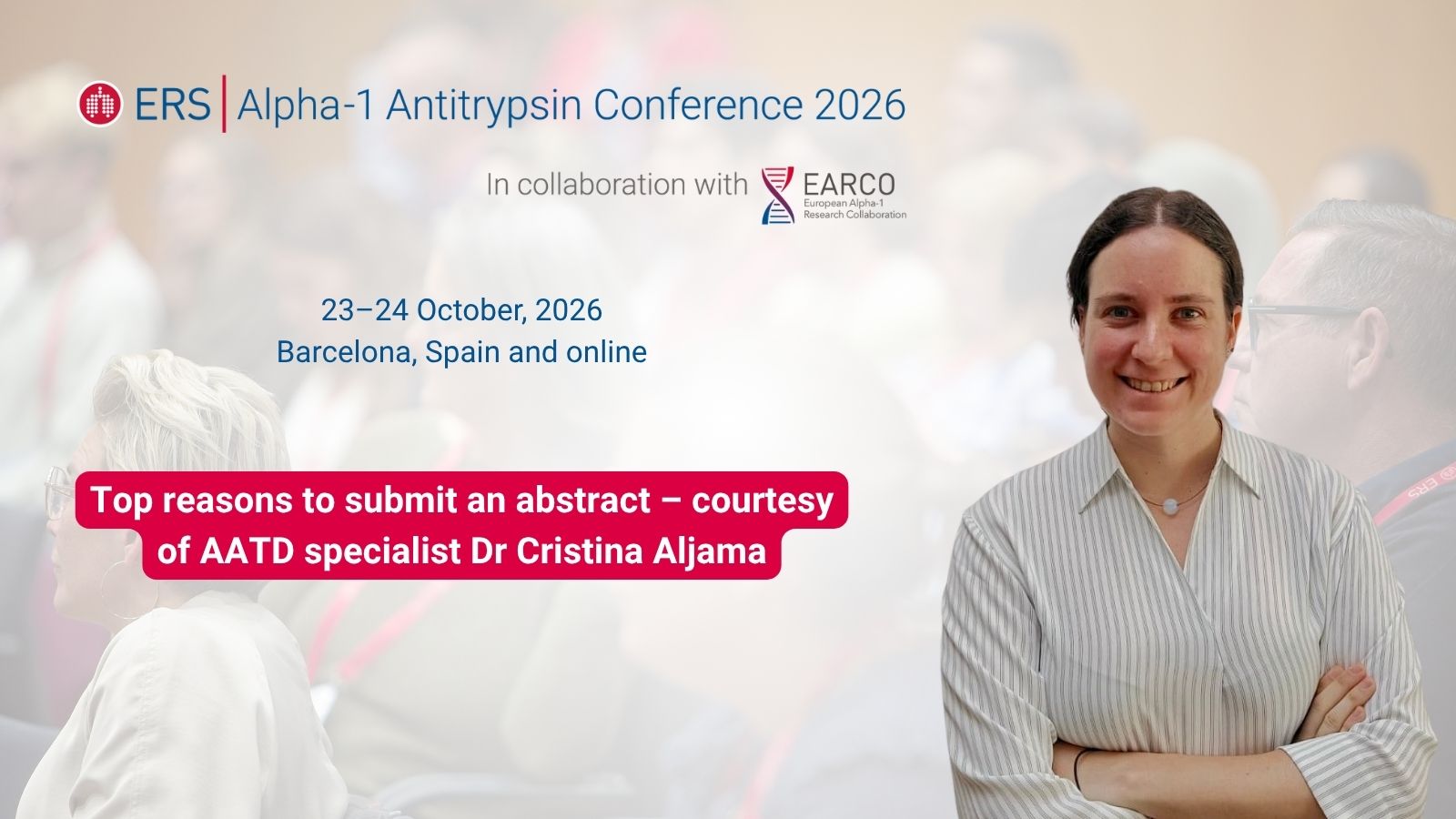
Ahead of the abstract submission deadline for the first ERS Alpha-1 Antitrypsin Conference (23:59 CEST, 30 April), an expert in alpha-1 antitrypsin deficiency (AATD) has encouraged AATD specialists to submit their work for presentation at the event.
Dr Cristina Aljama, an AATD specialist and pneumology doctor at Barcelona’s Vall d’Hebron University and Research Centre, has given us her top reasons to submit an abstract to the event:
- Submitting an abstract is “a unique opportunity”
“Submitting an abstract to the ERS Alpha-1 Antitrypsin Conference offers a unique opportunity to contribute to a highly specialised field,” said Cristina.
“It allows respiratory professionals to showcase original data, gain visibility, and share knowledge with an international community of experts. Importantly, it helps shape the scientific dialogue around a rare but impactful disease.”
- #ERSAlpha1 2026 will provide a platform for knowledge exchange
Cristina said: “Presenting at this conference represents a valuable platform to exchange knowledge within a dedicated international network.
“It enables direct interaction with leading experts and fosters meaningful scientific discussion.”
- An opportunity to be part of the inaugural event heightens the potential for those involved
This year’s ERS Alpha-1 Conference will be the first conference of its kind – it provides ‘a dedicated platform for the professional AATD community’, according to the Conference Chair and ERS President Elect Dr Marc Miravitlles.
Cristina agrees, saying: “As the conference addresses a clear unmet need in respiratory medicine, contributions have a heightened potential to influence clinical practice and research priorities.
“Being part of the programme means actively participating in advancing understanding and care in AATD. Each contribution can help bridge existing gaps in diagnosis and treatment.”
- Participation offers “critical visibility” for early-career professionals
Abstract content will be presented in a variety of different ways – including poster presentations and oral presentations. Cristina feels that presenting at the conference provides ‘critical visibility’ for early-career respiratory professionals.
“For early-career professionals, presenting offers critical visibility and the chance to build a professional network in a supportive and expert environment,” said Cristina.
“It encourages scientific development, confidence, and recognition within a niche field. Moreover, it can open doors to future collaborations and career opportunities.
“I strongly encourage colleagues to submit their work and be part of this important initiative. Every contribution adds value to our collective effort to improve patient outcomes; this is a unique chance to help shape the future of AATD care.”