




Delegates representing 162 nations and various civil society organisations recently attended the 11th Conference of the Parties (COP11) to the World Health Organization’s (WHO) Framework Convention on Tobacco Control (FCTC) to advance global tobacco control policies.
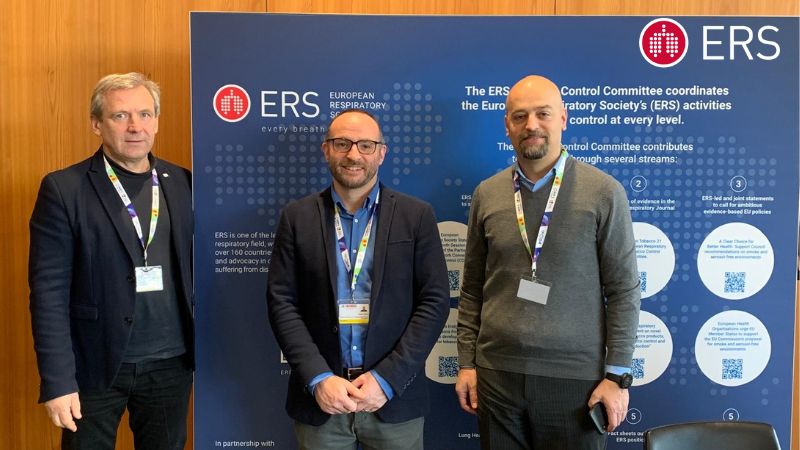
ERS was on site throughout COP11, which took place in Geneva, Switzerland, to represent the scientific and clinical expertise of the respiratory health community. ERS Tobacco Control Committee (TCC) Chair Dr Filippos Filippidis and TCC member Steven Baylis followed negotiations and engaged with public-health partners throughout the week.
Here are three decisions adopted at COP11 that align with ERS priorities:
- Forward-looking tobacco control measures (Article 2.1)
COP11 adopted the Article 2.1 decision on voluntary forward-looking measures. This decision clarifies and affirms that Parties may consider voluntary, forward-looking measures under Article 2.1, and supports experience-sharing to help countries that want to go further. ERS advocates for endgame approaches such as generational sales bans, and Tobacco 21, backed by our legal feasibility work on the generational sales ban in an EU context.
- Environmental protection: filters, components and toxic waste
Parties adopted a decision inviting countries to consider comprehensive regulatory options for tobacco and nicotine product components that increase environmental harms. This aligns with ERS’s position to classify tobacco waste as hazardous, prohibit greenwashing, and shift from extended producer responsibility to extended producer liability to ensure full industry cost recovery.
- Liability and industry accountability (Article 19)
COP11 adopted a decision inviting Parties to strengthen implementation of Article 19, including by considering legislative and administrative liability measures and increasing cooperation between countries. This aligns with ERS’s call for effective liability mechanisms – including levies, fees, and sanctions – to hold the industry financially accountable for harm.
Discussions were also held on harm reduction and novel nicotine products – and these discussions will continue at COP12. ERS maintains a clear evidence-based position that industry ‘harm reduction’ claims lack robust independent support, and that new nicotine products remain harmful, addictive, and drivers of youth uptake and dual use.
Read the ERS statement to COP11.