31 March, 2026
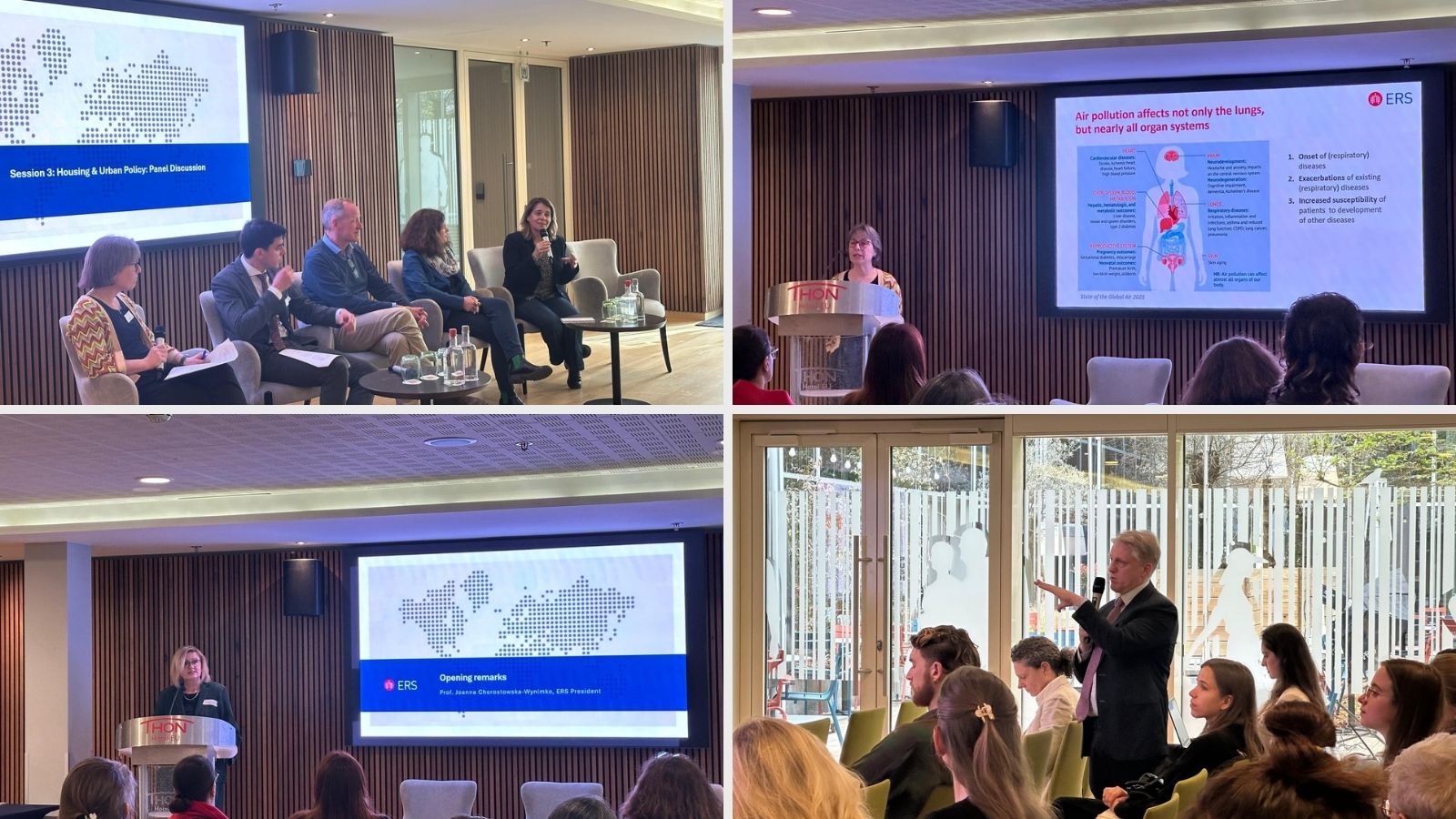
ERS recently brought together policymakers – including MEP Catarina Martins – clinicians, patient representatives and civil society in Brussels, Belgium to discuss inequalities in respiratory risks from environmental exposures across Europe.
Three key discussion points:
1. Ambition vs. action
The Society’s “The EU’s ambition for zero air pollution: more a dream than a reality?” sparked important discussions on the need for air pollution and health to be prioritised in the European Parliament. ERS Advocacy Council Chair, Prof. Barbara Hoffmann, highlighted:
“2024 changed the political landscape. New priorities emerged – lower energy prices and simplification. The Green Deal is now increasingly framed as a Clean Industrial Deal. But science tells us something different – the need to act on pollution and health has never been more urgent.”
2. Divided continent, divided health
A theme across several of the event’s sessions and panel discussion was that environmental exposures across Europe are not equal. Children, low-income households, rural communities, and workers in high-exposure sectors – amongst others – face the greatest respiratory risks from pollution, climate impacts, and emerging contaminants. There are also inequalities in the monitoring of these exposures across different areas of the continent, as remarked upon by Prof. Zorana J Andersen, ERS Advocacy Council Chair Elect:
“Less monitoring stations in Eastern Europe means less data. We must work further for better information from all countries to fight inequity in exposure to air pollution and protect public health across the continent.
We still need more local studies on health effects in Eastern Europe to build local capacity and inform local action and measures towards clean air.”
3. Healthy homes, healthy Europe
Another key discussion point of the event was the importance of housing and urban policy to reduce the impact of indoor air pollution from heating and cooking systems and mould exposure.
Dr Ulrike Gehring, ERS Environment and Health Committee Chair, who moderated the panel discussion on this topic, commented:
“The housing and climate crisis are deeply connected and interlinked with air pollution and health. Cities have an important role to play, but they cannot act alone. We need action at regional, national and European level, science driven policies and commitment to strengthen legislation beyond 2030.”
What now?
This event is part of ERS’s ongoing advocacy work on this topic, learn more about the ERS Environment and Health Committee.
Resources from this event, including presentation slides and interviews with key speakers will be made available soon on the ERS Respiratory Channel.